The oldest coin in a collection isn’t necessarily its most valuable. If you’re exploring australian pre decimal coins, unfamiliar denominations and historic designs can make identification difficult. Age alone won’t tell you whether a coin is scarce or fairly priced.
Look beyond a date or a rarity claim. A coin’s denomination, mintmark, condition, provenance and current collector demand all help shape its fair market value. Wear, cleaning and damage can affect collector appeal, so use a consistent approach to assess each coin before comparing prices.
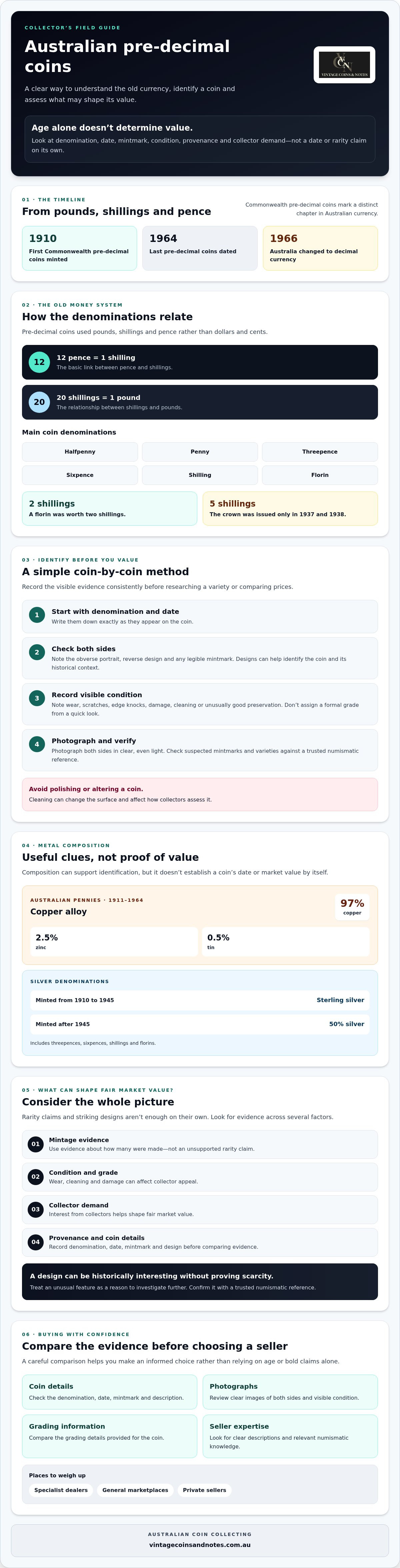
This guide explains the pre-decimal system and its place in Australian history, from the first Commonwealth coins in 1910 to the last coins dated 1964, before decimal currency arrived in 1966. You’ll learn how to identify key denominations, assess condition and compare market evidence before buying. We’ll also cover what to look for in a reputable numismatic seller, so you can make an informed choice rather than relying on age or bold claims alone.
Key Takeaways
Learn how the pounds, shillings and pence system shaped the denominations found on australian pre decimal coins.
Identify a coin systematically by checking its denomination, date, portraits and reverse design before recording its condition.
Assess potential value through mintage evidence, grade, demand and provenance, rather than relying on a rarity claim alone.
Use a clear buying checklist to compare coin details, photographs and grading information before choosing a seller.
Weigh up specialist dealers, general marketplaces and private sellers, and look for clear descriptions and relevant expertise.
What are Australian pre-decimal coins, and what makes them distinctive?
Australian pre-decimal coins are coins denominated in pounds, shillings and pence, rather than dollars and cents. In this system, 12 pence made one shilling and 20 shillings made one pound. Commonwealth pre-decimal coins were first minted in 1910, and the last were dated 1964. Australia changed to decimal currency in 1966.
In short, pre-decimal Australian currency used pounds, shillings and pence before the 1966 changeover, while decimal currency uses dollars and cents. The denominations can seem unfamiliar at first, but learning how they relate makes coins easier to identify and gives collectors a tangible connection to the country’s history. For a broader historical overview, see Coins of the Australian pound.
Which denominations appear in Australian pre-decimal coinage?
The main denominations were the halfpenny, penny, threepence, sixpence, shilling and florin. Their values followed the pounds, shillings and pence system: a shilling equalled 12 pence, and a florin was worth two shillings. The crown, valued at five shillings, was issued only in 1937 and 1938. When sorting australian pre decimal coins, identify the denomination first, then check the date and design.
How did Australian pre-decimal coins reflect their era?
Many coins carry a monarch’s portrait on the obverse, while reverse designs feature Australian symbols and other imagery. Changes in monarchs and designs make coins small records of the era in which they circulated. Examining both sides can help narrow down a coin’s identity and place it in its historical context. The design, however, doesn’t establish scarcity or market value by itself.
Historical interest and numismatic value are related, but they aren’t the same. A coin may appeal because of its design or the period it represents, while its fair market value depends on evidence such as date, mintage, condition and collector demand. Treat a striking design as a reason to investigate further, not proof that a coin is rare.
Identifying Pre-Decimal Coins by Date and Design
A consistent method helps distinguish one coin from another, especially when wear has softened the details. Start with the denomination, then inspect the date, note the designs on both sides and record the coin’s condition. This creates a useful identification record before you research a variety or consider its value.
What should you record when identifying a coin?
Write down the denomination and date exactly as they appear, followed by visible design details and any legible mintmark. The obverse, usually bearing a monarch’s portrait, and the reverse can help narrow the identification. A faint mark or unusual feature alone isn’t enough to confirm a variety. Check suspected mintmarks and varieties against a trusted numismatic reference rather than relying on resemblance.
Record whether the coin appears circulated, damaged, cleaned or unusually well preserved. Note specific signs such as scratches, edge knocks or areas of wear, without trying to assign a formal grade from a quick look. Photograph both sides in clear, even light so details can be reviewed later. Handle the coin carefully and don’t polish or alter it: cleaning can change its surface and affect how collectors assess it.
How do copper and silver denominations differ?
Pennies and halfpennies are familiar copper-denomination collecting categories. Australian pennies dated 1911 to 1964 were made from an alloy of 97% copper, 2.5% zinc and 0.5% tin. Silver denominations, including threepences, sixpences, shillings and florins, also changed composition over time: Australian silver coins minted from 1910 to 1945 were sterling silver, while those minted after 1945 contained 50% silver. Composition can help with identification, but it doesn’t establish a coin’s date or value by itself.
For a useful catalogue entry, record the denomination, date, obverse portrait, reverse design, any readable mintmark, metal type where known, and visible condition issues. These details make it easier to compare the coin with reference material and evaluate it on its own merits. The Australian rare coins collector’s guide offers broader context on rarity and value. If a feature remains uncertain, expert advice or a valuation can help you assess australian pre decimal coins without relying on a guess; explore coin valuation advice.
What determines the value of Australian pre-decimal coins?
A coin’s fair market value reflects more than its date or denomination. Mintage evidence can indicate how many were struck, but surviving numbers, condition, collector demand and provenance also matter. Age alone doesn’t establish rarity or fair market value. An old coin may be common, while a scarcer date in poor condition may attract a different level of interest from a well-preserved example.
Assess the evidence as a whole. Confirm the coin’s identity first, then compare reliable mintage information and recent market activity for the same date, denomination and condition. Provenance, or the documented history of ownership, can provide useful context, particularly for a coin with an unusual history. Treat a rarity label cautiously unless it’s supported by sound identification and market evidence.
Coin profile
What to consider
Common circulated example
Visible wear may reduce design detail. Compare it with similar coins in a comparable grade and check whether demand is steady.
Better-preserved example
More original detail and fewer distracting marks may increase collector appeal, but assess surface condition and authenticity carefully.
Scarce date or variety
Confirm the date or variety against a trusted reference, then consider mintage evidence, condition, provenance and current demand together.
How does condition influence a coin’s collector appeal?
Condition describes how much detail remains and what has happened to the coin’s surfaces. Circulation wear gradually softens raised features; scratches, edge knocks, corrosion or other damage can further affect its appearance. Original surfaces are generally preferable to altered ones. Don’t clean or polish a coin, as this can leave marks and complicate an assessment.
Grading uses consistent standards to describe condition, but assessments can differ between evaluators, especially where wear, surface marks or cleaning are open to interpretation. Treat a grade as one part of the evidence, not a guarantee of market value. When comparing coins, look for examples with similar detail and surface condition.
When is third-party grading worth considering?
For a potentially scarce, high-grade or difficult-to-identify coin, professional grading may help establish its identity and condition. Third-party services can authenticate and encapsulate suitable coins, but grading doesn’t promise a higher resale value. Consider whether the added assessment is useful for the particular coin and your collecting purpose. For further detail, read this PCGS graded coins guide.
For australian pre decimal coins, careful comparison is more reliable than broad claims about rarity. A valuation can help bring identification, condition and market context together.
Buying Australian Pre-Decimal Coins with Confidence
A considered purchase starts with evidence, not an exciting rarity claim. Use this checklist to assess a coin in sequence, then decide whether it suits your collection and whether the available information is enough to make an informed choice.
Define your collecting goals. Decide whether you’re building a set by denomination, date or design, or choosing individual coins for their historical interest. A clear focus helps you compare suitable examples.
Identify the coin. Confirm its denomination and date, then check the design and any claimed mintmark or variety against a trusted numismatic reference.
Assess its condition. Look for wear, remaining detail, marks, damage or signs of cleaning. If the grade is important to your decision, seek a professional assessment rather than relying solely on a seller’s description.
Compare the evidence. Review similar coins with matching dates, varieties and condition. An isolated asking price doesn’t establish fair market value, so look for relevant market evidence and consider provenance where available.
Choose a seller carefully. Look for clear, consistent descriptions and images, relevant numismatic knowledge and straightforward transaction information. Ask questions if important details are missing.
What should buyers check in a coin listing?
A useful listing identifies the denomination and date, describes the coin’s condition and explains any claimed variety. Check for clear images of both sides, and ask for clarification if a mintmark, surface issue or design detail is difficult to see. Compare like with like: don’t judge a worn coin against an example in much better condition. Where provenance or grading details are provided, consider how they support the description.
Confident claims that a coin is rare should be backed by verifiable numismatic evidence, such as a confirmed variety or reliable mintage information. Emphatic wording and a high asking price aren’t proof.
How can collectors avoid common buying mistakes?
Age alone doesn’t make a coin scarce, and wear or an unusual appearance isn’t proof of rarity. Don’t clean, bend or scratch a coin to test it; those actions can damage its surfaces and affect collector appeal. If authenticity, grade or value remains uncertain, pause and seek an independent opinion before proceeding.
Keep purchase records, including the seller’s description, images and any grading or provenance details. Store coins in suitable holders that won’t scratch or otherwise damage their surfaces, and handle them carefully. If you’d like experienced guidance on assessing a coin or collection, request expert coin advice and valuation.
Where to Find Pre-Decimal Coins and Expert Advice
Collectors can find australian pre decimal coins through specialist numismatic dealers, general online marketplaces or private sellers. Each offers a different buying experience. A specialist dealer may provide numismatic knowledge and detailed coin descriptions; a general marketplace may offer a broad range of listings, but information and image quality can vary; and a private seller may have limited expertise or documentation. In every case, assess the coin and transaction details rather than relying on the seller’s claims alone.
Check whether the description clearly identifies the denomination, date, condition and any claimed variety. Images should show both sides, and the seller should be able to clarify important details. Compare similar coins and available market evidence, not just one asking price. Before buying, understand the stated payment, delivery and return arrangements, and keep records of the listing and transaction.
Vintage Coins & Notes is a family-owned Australian numismatic business with more than 45 years of industry experience. It sells Australian pre-decimal coins and provides expert advice, professional grading and valuation services. Consider whether the information available is sufficient for your collecting needs, and ask questions if something is unclear.
When can an expert appraisal help?
An appraisal may be useful when a coin or collection is difficult to identify, when condition is uncertain, or when you need help understanding fair market value. This can be particularly helpful with inherited collections or coins that appear unusual but lack clear documentation. A professional valuation offers an informed assessment based on the material presented; it isn’t a guarantee of a sale price or future investment performance.
How can you take the next step as a collector?
Start with a collecting focus that interests you, such as a denomination, period or design. Keep notes and purchase records, including descriptions, photographs and any grading or provenance details. Build your knowledge gradually by checking coins against reliable references and asking informed questions. There’s no need to buy in a hurry because of a bold rarity claim or a sense of urgency.
For a considered next step, explore Vintage Coins & Notes’ Australian pre-decimal coin offering or ask about expert advice and valuation services. A steady approach helps make collecting more rewarding, whether you’re beginning with a single coin or organising a larger collection.
Build Your Collection with Confidence
Collecting australian pre decimal coins is more rewarding when curiosity is matched with careful research. Start by identifying the denomination, date and design, then assess condition and compare credible market evidence. A coin’s age or a seller’s rarity claim alone can’t establish its fair market value.
Clear records, careful handling and a measured approach can help you make informed choices as your knowledge grows. If a coin’s identity, grade or value remains uncertain, professional grading, valuation and expert advice can provide useful context.
Vintage Coins & Notes is a family-owned business operated by David Jobson, with more than 45 years of numismatic experience. Explore Australian pre-decimal coins and expert numismatic advice as you consider your next step. With patience and sound information, you can enjoy holding a meaningful piece of Australian history in your hands.
Frequently Asked Questions
What are Australian pre-decimal coins?
Australian pre-decimal coins were denominated in pounds, shillings and pence, the currency system used before decimal currency began in 1966. Collectors commonly encounter halfpennies, pennies, threepences, sixpences, shillings and florins. To identify a coin, start with its denomination and date, then check its design and condition against a trusted reference. Age alone doesn’t establish rarity or value; documented scarcity and collector demand also matter.
When did Australia change from pre-decimal to decimal currency?
Australia changed to decimal currency in 1966, replacing pounds, shillings and pence with dollars and cents. Pre-decimal coins remain of interest to collectors because their denominations and designs record an earlier period of Australian history. For an individual coin, check the date and denomination carefully against a numismatic reference. The changeover itself doesn’t make every older coin scarce or valuable; condition, documented rarity and demand need to be considered.
Which Australian pre-decimal coins are valuable?
Value depends on the specific coin, including its date, rarity, condition, authenticity, provenance and collector demand. A scarce date or verified variety may attract interest, but age or an online asking price alone doesn’t establish fair market value. Confirm the coin’s identity with a reliable reference, then compare like-for-like examples in similar condition. If a coin seems significant or is difficult to identify, an experienced numismatic professional may help assess it.
How can I tell whether an Australian pre-decimal coin is silver?
Identify the denomination and date first, then check those details against a reliable numismatic reference for the coin’s composition. Australian pre-decimal silver coins minted between 1910 and 1945 were 92.5% silver; those minted after 1945 contained 50% silver. Appearance alone isn’t conclusive, as wear, tarnish and lighting affect a coin’s colour. Avoid scratching, polishing or using chemicals to test it. Seek expert advice if composition matters to your decision.
How do I value an Australian pre-decimal coin?
Record the denomination and date, note visible wear or damage, and check whether a claimed mintmark or variety is supported by a trusted reference. Then compare market evidence for similar coins in comparable condition. An asking price isn’t necessarily evidence of fair market value, and provenance and collector demand may also affect an assessment. If the coin is uncertain or potentially significant, an experienced numismatic professional can assist with identification and valuation.
Should I clean an old Australian coin before selling it?
No, don’t clean an old coin before selling it. Polishing or chemical treatment can scratch the surface, remove original material or leave marks that affect collector appeal. A coin that looks tarnished or dirty may be better left untouched until it has been assessed. Handle it carefully by the edges and keep it in a suitable, non-damaging holder. If you’re unsure about its condition, ask a knowledgeable numismatist before taking any action.
A single 7.98-gram disc of 22-carat gold struck at the Melbourne Mint in 1901 carries more weight in a modern portfolio than almost any digital asset. While many investors focus solely on fluctuating spot prices, the end…
Holding a 1930 Australian Penny isn't just about owning a piece of copper. It's about possessing a tangible relic of the Great Depression that, in high grades, has seen its value climb toward A$30,000 at recent auctions.…